TOEIC graphic questions: reading the chart before you listen

A graphic question shows a chart, schedule, map or list next to the question. Read the graphic in the few seconds before the audio starts so you know what to listen for, then let the audio tell you which row, item or location to pick - the graphic itself never says the answer out loud.
What a graphic question looks like
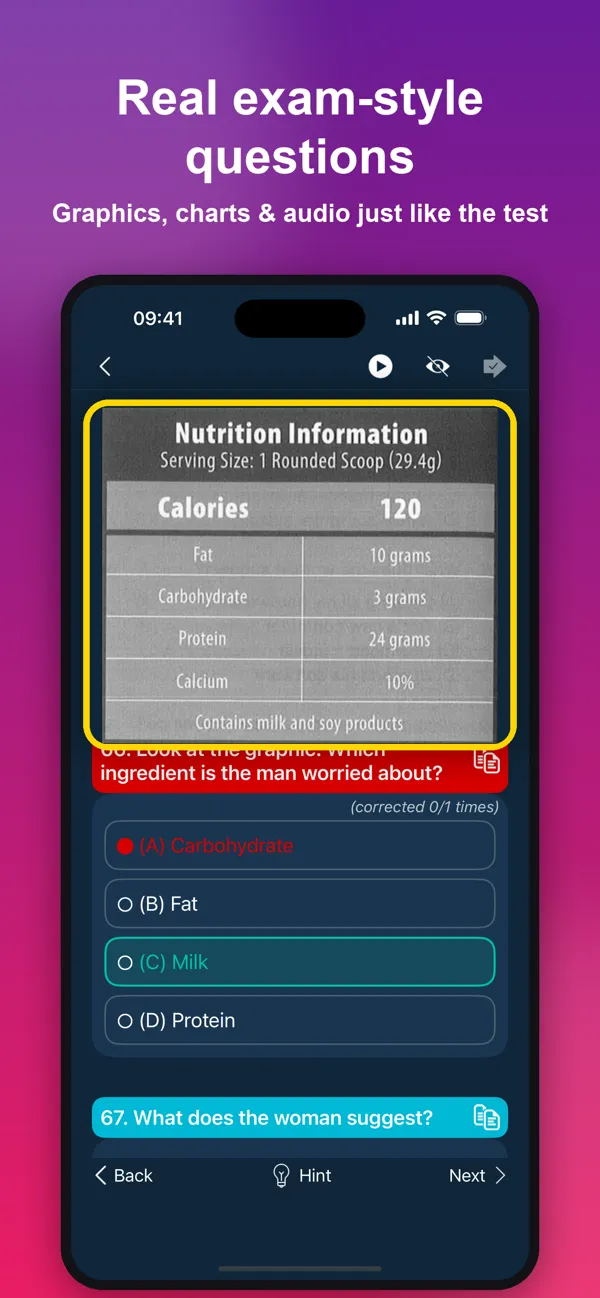
Part 3 and Part 4 each include one graphic question per set: the question appears next to an image such as a price list, floor plan, weather forecast, sign-up sheet or seating chart, and one of the four answer choices is tied directly to a detail in that image.
The question itself is usually simple, such as 'Look at the graphic. Which room will the man visit?' or 'Look at the graphic. How much will the woman pay?' The audio gives you the clue you need to match to the graphic; it does not read the graphic's labels aloud.
The four common graphic types
| Graphic | What to check first |
|---|---|
| Price list or order form | Which item, size or quantity is mentioned, not the price column |
| Schedule or itinerary | Which day, time slot or flight/train number is named |
| Floor plan or map | Which room, booth or street is described, often by what's near it |
| Chart or graph | Which label, bar or segment matches the date or category mentioned |
Read the graphic before the audio starts
Use the few seconds before the audio begins to look at the graphic and the question, not the four answer choices yet. Find the column or detail that is not spoken directly - that is usually the one the question will ask about.
For a price list, for example, glance at the item names so you recognize them when spoken, then plan to match the mentioned item to its price yourself instead of listening for a number.
Listen for the detail that points to the graphic
The speakers will mention a name, day, item or location out loud, and you use that spoken detail to find the matching row or section in the graphic. The correct answer choice is often a label from the graphic that was never actually said in the audio.
Common traps repeat a number or word from the graphic that the speakers do mention, but for the wrong row - for example confirming a changed time instead of the original one printed on the schedule.
Practice routine
Collect graphic questions from your practice tests into one set and redo just those, timing yourself on how fast you can read the graphic before the audio starts. Review the transcript afterward to see exactly which spoken word was the link to the graphic.
Frequently asked questions
How many graphic questions are on the TOEIC test?
Typically one in Part 3 and one in Part 4, so two per test, each attached to a short conversation or talk.
Do I need to read every word on the graphic?
No. Skim for the labels and categories (items, times, locations) so you recognize them when spoken; you do not need to memorize every number before the audio starts.
Why is the obvious-looking number sometimes wrong?
Graphic questions often test whether you listen for a change or correction mentioned in the audio, such as a rescheduled time, rather than just matching the first number you see on the chart.