Taking notes during TOEIC Part 3 and Part 4

Write only short keywords and symbols next to each question number, never full sentences. Capture names, numbers, times and the main problem or decision; use an arrow for 'next step', a question mark for anything unclear, and move on immediately if you miss a word.
Why note-taking is a separate skill
Knowing what a question is asking (covered in our Part 3 & 4 strategy guide) is different from being able to write fast enough to keep up with the audio. Many test takers understand the conversation but still choose the wrong answer because their notes are messy or incomplete by the time the questions appear.
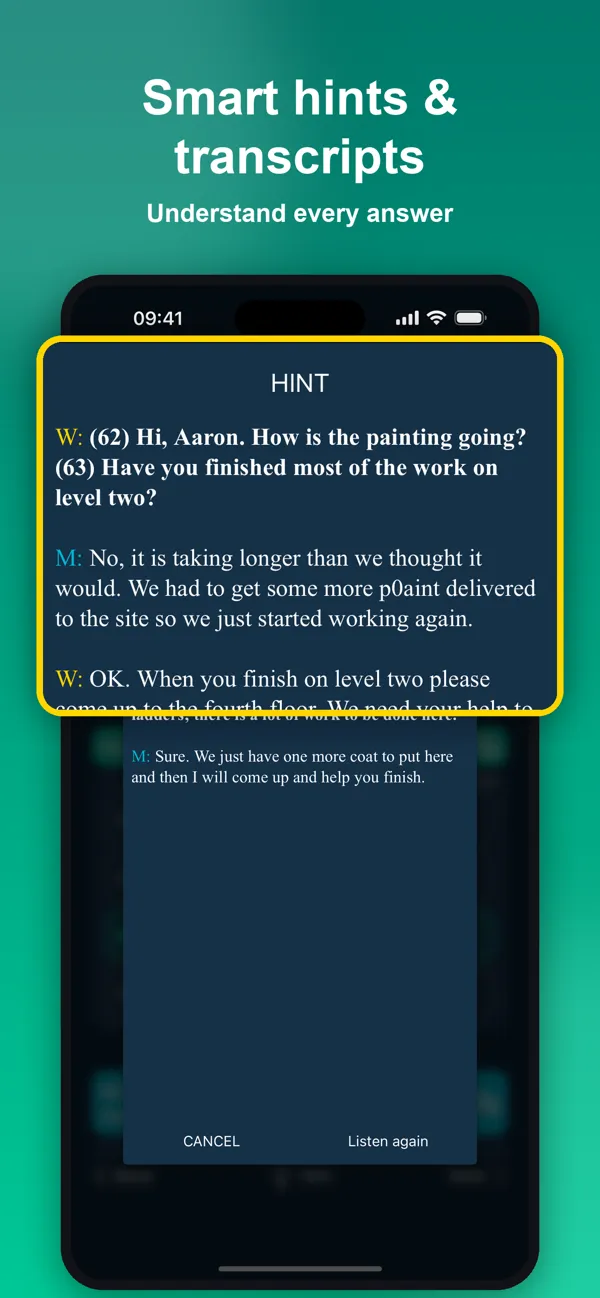
Set up your note space before the audio starts
During the short pause before each conversation or talk, write the three question numbers on your scratch paper with space between them. This takes two seconds and means you are never searching for where to write.
Use symbols instead of words
- → for 'what happens next' or 'what will someone do'
- ? for anything you didn't catch — don't stop to figure it out, keep listening
- $ for prices, fees or budgets
- @ for a time or place
- = for a reason or cause
What is worth writing down
Names and job titles (write just the first letter if that's enough to tell two speakers apart), numbers, times, and the one problem or request being discussed. Skip filler words, greetings and anything that's clearly background detail.
If you fall behind
Never go back to catch a missed word. Leave a question mark and focus on the next sentence — answers are usually spread evenly through the audio, so losing one detail rarely costs you the whole question.
Practice the system, not just the audio
Pick five Part 3 or Part 4 recordings you've already heard and practice writing notes while replaying them. Once your symbols feel automatic, try them on new audio without pausing.
Frequently asked questions
Should I write full words or sentences?
No. Full sentences take too long. Use single words, abbreviations and symbols so you can keep listening.
What if I miss a number or name?
Mark it with a question mark and move on. Going back to think about it means you'll miss the next piece of information.
Does note-taking help with graphic questions too?
Yes — jot the detail from the chart or schedule that matches what you hear, so you don't have to re-read the whole graphic when the question appears.